Introduction — a short scene, some numbers, and the question
I was standing in a small plant one winter morning, watching an old conveyor shudder back to life after yet another patchwork repair. The crew cheered — relief more than triumph. In my years around this kind of work, I’ve seen a single downtime event wipe out a week’s margin (and a lot of patience). As an electric motor supplier becomes the linchpin for uptime and cost control, companies I talk to report that nearly 30–40% of unexpected stoppages trace back to mismatched parts, poor torque control, or inadequate service plans.

So I ask plainly: how do you choose a partner who understands your equipment, not just the catalog? That’s the question that follows me into every plant visit, every phone call, and every spec sheet I review. The choices matter — painfully so — which is why I want to walk you through what I’ve learned. Let’s look at the real problems and what to do next.
Why common fixes miss the point — deeper flaws and hidden pains
I want to start by linking the discussion to real resources: read more on electric motor & supply if you need the baseline details. Now, listen — the usual fixes people reach for are quick wins. They replace a motor with the nearest spec, add a higher-rated inverter, or swap to a brushless DC model thinking that solves all reliability woes. That often helps short-term. But in my view, it ignores how systems behave together: mismatched power converters and poorly tuned PWM drive settings can create heat pockets and premature bearing wear. I’ve watched panels overheat because the motor’s control logic and the plant’s control scheme never saw eye to eye.
Technically speaking, a lot of suppliers treat torque control, inverter selection, and cooling as separate boxes on a checklist. They’re not. You need an integrated view — mechanical load curves, ambient conditions, start-stop cycles, and the real-life duty cycle. Look, it’s simpler than you think when you start asking the right questions. And yes — funny how that works, right? The hidden pain point? Teams pay for “compatibility” on paper and still get surprises in the field. Those surprises cost time, parts, and a good chunk of morale.
So what typically goes wrong?
Often: the motor fits the spec but not the pattern. You get correct horsepower but wrong control approach. Bearings fail because vibration profiles were ignored. Service contracts are generic rather than predictive. These are easy misses until they’re costly lessons.
New technology principles and where we go from here
Moving forward, I want to be practical — and a little optimistic. Advances in sensor-based monitoring, edge computing nodes, and smarter motor drives let us treat maintenance as a prediction, not a surprise. When I talk about motor and control solutions, I mean not just the hardware but the data flow: condition monitoring feeding a controller that can tweak inverter output in real time. That reduces stress on the rotor, extends bearing life, and smooths startup currents. In short: better uptime with less firefighting.
Think of it this way: instead of throwing more power converters at the problem, we tune the whole system. We pair motors with drives that understand load profiles. We use real operating data to set parameters, and we schedule service before a failure — not after. I’ve seen plants cut unplanned downtime by a third when they move from reactive repairs to this more measured approach — real savings, not just promises. And — I’ll say it plainly — it changes how teams feel about their gear. They worry less. They sleep better. It matters.
What’s Next — practical takeaways
If you’re choosing between suppliers, focus on three evaluation metrics I use every time I advise a client: 1) System compatibility checks (are torque curves and control logic reviewed together?), 2) Predictive service capability (do they offer condition monitoring and actionable alerts?), and 3) Field support depth (do they send engineers who know your processes, not just reps with catalogs?). I would add a fourth if pressed: spare parts strategy — how fast, how local, and how matched to your exact models.
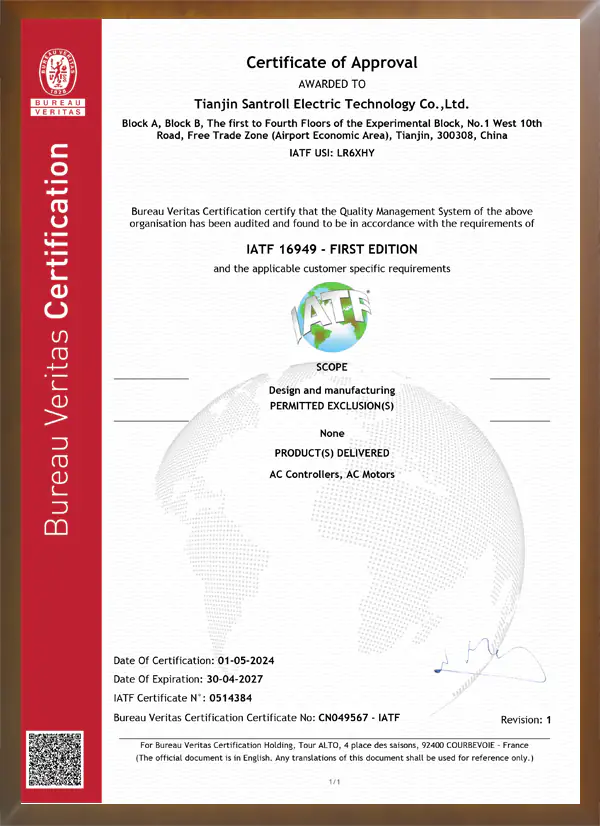
To sum up, I’ve learned to favor partners who look beyond the sticker specs and into the operating life of the machine. Ask the hard questions. Demand data. And if you want a place to start, consider firms that combine engineering with on-site experience — like the teams I’ve worked with at Santroll. We’re in this line of work because we like machines that keep working — nothing sentimental, just practical pride. — funny how that works, right?